All Categories
Featured
Table of Contents
Nevertheless, consumer costs has remained fairly resistant up until now, allowing industrial demand to continue growing despite cynical sentiment readings. Inflation has cooled however remains above the Federal Reserve's long-term target. The core Customer Rate Index increased 2.5% over the past year, suggesting that loaning expenses may stay elevated longer than many market participants had expected.
Meanwhile, labor market conditions have actually begun to soften. Job development slowed significantly in 2025, averaging 15,000 new tasks monthly, compared with 168,000 month-to-month jobs included 2024. Since employment patterns directly affect customer spending and supply chain activity, the direction of the labor market will be a vital factor shaping commercial demand in the coming years.
The model evaluates more than 40 economic and genuine estate variables, consisting of producing output, work levels, GDP growth, imports and exports, transport activity, and historic absorption data. Utilizing methods such as Kalman filtering and exponential smoothing, the design accounts for seasonality and shifting financial relationships, permitting the forecast to adjust to evolving market conditions.
The Future of Integrated Retail Platforms in 2026
For developers, investors, and construction firms, the projection points to a market transitioning from quick growth to determined development. The amazing commercial boom of 2020 through 2022 has actually cooled, but the underlying motorists of logistics demande-commerce, supply chain restructuring, and population growthremain firmly in place. Over the next several years, the marketplace is anticipated to shift towards higher-quality logistics facilities, modernization of aging inventory, and strategic local distribution networks.
While economic uncertainty remains an aspect, the data recommend that the industrial sector is approaching a more stableand sustainablegrowth cycle. And for an industry that spent the past a number of years racing to stay up to date with need, stabilization might be exactly what the marketplace needs.
The Retail Supply Chain & Logistics Exposition provides an unequaled opportunity to check out innovative developments and options tailored to your business needs. Throughout the 11th & 12th of November 2026 at Excel London, you'll connect directly with industry leaders and suppliers to find important techniques for improving logistics, boosting efficiency, and enhancing consumer satisfaction.
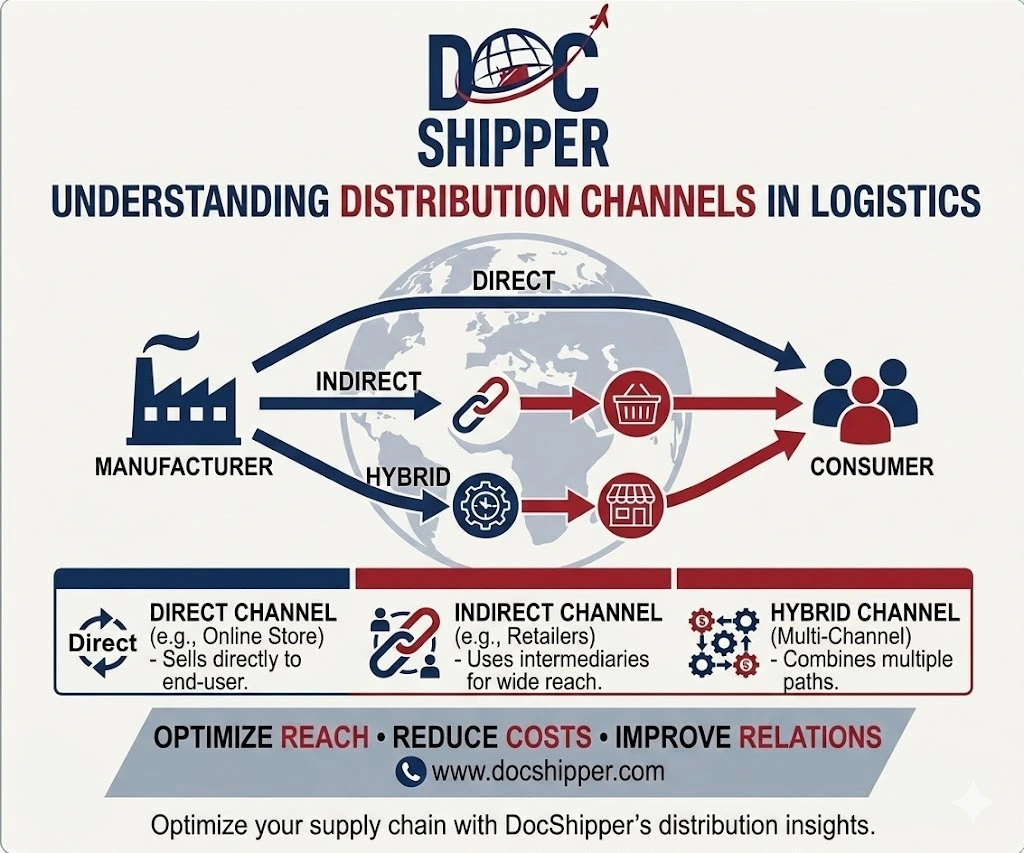
Designing Agile Multi-Channel Distribution Networks in 2026
Retail Merchants are cutting down on SKUs to improve margins. Leading up to the pandemic, the typical grocery store carried between 30,000 and 35,000 SKUs, up from about 20,000 a decade previously. Some grocers offered 50% more SKUs per linear foot than their mass and value competitors. Volatility in demand and thinning margins have because exposed the costs of unproductive varieties and replicate products on racks.
Effective Tips for Scaling On Multiple Sales ChannelsGrocery merchants are reducing and fine-tuning the number of items to much better handle their in-store retailing and keep stock consistent, while providing a positive shopping experience for clients. With the best selection, consumers don't feel as though their options are restricted. In truth, many report an enhanced shopping experience. As customers look for new methods to extend food budget plans, promos and seasonal buying durations might no longer carry out the same method they have historically.
Synthetic intelligence can be utilized to evaluate SKU-level efficiency and demand elasticity by modeling replacement habits.
What was once standard lay-away has developed into a set of advanced services that offer short-term, interest-free installment strategies. These programs have actually grown across both in-store and online shopping experiences, growing by 13% to over $560 billion internationally in 2025. By 2027, it's expected that over 900 million consumers will have used buy now, pay later.
These programs likewise increase the buyer conversion ratefrom "just looking" to purchasing. The programs are no longer primarily used for expensive items like traditional lay-away plans were, however more often for daily purchases. These programs include greater credit threat. Roughly 3040% of users miss out on payments. Among Gen Z buyers, that figure increases to 51%.
How Next-Gen WMS Tech Will Define 2026 Logistics
Merchants deal with operational challenges with these transactions because of greater return rates and complex chargeback management. Business that utilize buy-now, pay-later programs must examine and improve their reverse logistics method and prepare for seasonal return spikes, for instance around the December vacations. The U.S. Supreme Court has actually ruled tariffs enforced under the International Emergency Economic Powers Act (IEEPA) were unlawful.
Emerging Local Pickup for 2026 RetailNew tariffs under other legal authorities are widely anticipated. The administration has instituted a momentary 10% tariff under Section 122 of the 1974 Trade Act. This tariff is limited to 150 days unless an extension is given by Congress. The administration has actually signaled it will replace it with long-term tariffs under Section 301.

Latest Posts
Future-Proofing Your Logistics Supply Chain for 2026
Navigating Global Stock Control in Modern E-Commerce
Managing Complex Multi-Platform Order Workflows